Is Free Will Real?
Musings about the future from an open perspective.

Does God know the future? All Reformed and most Arminian theologians would unreservedly say “yes.” If God knows the future then is the future set in stone? Again, all Reformed and most Arminian theologians would say “yes.” Does, then, foreknowledge equal determination and causation? Here we find the main split between the Arminians that believe in human free will and the Reformed/Calvinist perspective that God not only knows the end from the beginning but He has ordained and directed it.
A quarter-century ago I took a class called “The Atheistic Argument from Evil.” While I can’t vouch for the economic utility for that endeavor I can say that the readings, debates, and discussions from that class have been bouncing around in my head to varying degrees ever since. The basic premise of the Atheistic Argument from Evil is this:
If evil exists then it proves that an omniscient, omnipotent, and loving God does not exist because an omniscient, omnipotent, and loving God would not allow the evil to occur.
This version of the argument can be rebutted a number of ways—often relying on human agency/free will as the explanation for the existence of evil without impugning the character or denying the existing of God. Spoiler alert, however, it is difficult to maintain a cohesive philosophical and theological framework for a world where God knows every outcome in advance and yet is still disappointed and angry at our sin and disobedience.
I remember being entirely unconvinced and a little bit disturbed by the responses from Christian theologians. The Calvinist approach is to fully embrace the idea that God’s sovereignty means control and that every event from the birth of Jesus to the death of a child from cancer are the perfect expression of the will of God. Further, because God’s will is perfect, every event that happens, no matter how heinous or random it may seem, is the best possible outcome. There is no possible reality with less suffering or less evil than ours because there is no other possible reality.
While I instinctively rejected the Calvinist conclusions I did have to admit the strength of the logic in that followed from their premises. The traditional Arminian argument is that God knows the exact future but is outside of time so free will still exists. This creates more logical problems than it solves but I will not go into detail on those issues in this post. I believe Calvinists are actually right about the theological/philosophical implications of their view of God’s foreknowledge (which is also the mainstream Arminian view of God’s foreknowledge). If God does indeed know exactly what will happen in the future then there is indeed only one possible future. Free will is an illusion; obedience is an illusion, and each individual person is either saved or damned before they are ever born.
In my informal collegiate debates the Reformed pastors-in-training (who made up the majority of this class) accused me of being an “open theist.” I had no idea what that meant at the time. Once I started researching open theism, however, I found the arguments very compelling. Let’s look at an “open theist” argument for God’s existing against the atheistic arguments from evil and suffering.
The future is not set in stone.
Love is only possible where free will exists.
Obedience and disobedience are only possible where free will exists.
Human free will (free will is often identified as the ability to do the opposite) is real but not absolute.
God’s knowledge of the future is perfect but He knows the future as it really is—as a set of possible outcomes.
Once God granted free will to man He did not rescind it because Adam and Eve sinned. The opportunity to have a loving relationship with mankind was worth the risk that man would choose death instead.
Suffering and evil are caused by human choices, the choices/actions of fallen angels, and also consequences of living in an imperfect world (accidents, natural disasters, etc.)
From man’s perspective, the future is mostly unknowable except for God’s promises.
God’s view of the future is partially closed and partially open. If God has decided something will happen then it will happen (that part of the future is “closed.”) Therefore the future is, in reality, partially open and partially closed.
God is sovereign over every possible outcome (of which there are a number that seems infinite to man). There is no possible outcome where the Day of the Lord and the other events prophesied in Scripture do not come to pass. Jesus is coming back (that part is closed). However, the state of my soul and the state of your soul when Christ returns are open. Whether we choose the narrow way and obey or the wide path of destruction actually matters.
One of the most freeing results of the open theist view of the world is that we can start actually believing what the Bible says again. God is not pretending to be angry because His people disobey—He is actually angry. Obedience is an actual choice, both for the Israelites in the time of Moses and for Christians today. God is genuinely pleased when we obey because disobedience is also a real possibility.
This view of the future has implications for everything from the “once saved always saved” view of salvation to our interpretation of Biblical prophecy. It also has the potential to impact how we live our lives. It seems to me that everyone already lives as though free will were real in the secular/worldly part of our lives. However, would our lives change if we really, truly, fully believed that our choices, our actions, our obedience or disobedience will have eternal ramifications for ourselves, our kids, and our neighbors?
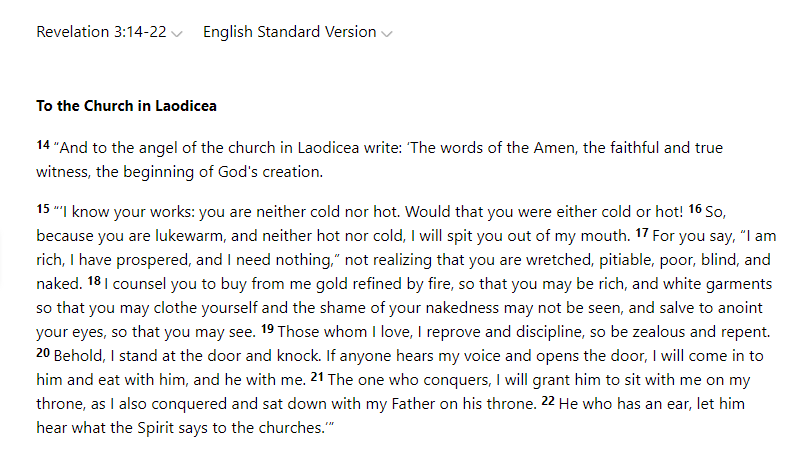
"partially closed, and partially open"... It's amazing how things like this can seem so obvious and undeniable at this stage in our walk, when for many years it was somehow presented to us as being all one or the other. Praise God that He is patient with us and reveals these things through His Word.
I’ve always been taken about how “open theism“ is used like some sort of a magical talisman for when people don’t want to engage in a debate. For some reason, nobody wants to go down that road.
At some point it always to me seems like a bit of a academic Convo anyway because the thing that I really care about is your relationships Across the spectrum.
Your relationship with God
Your relationship with your environment in the universe around you
Your relationship with other people.